

A customer walks into your store, makes a purchase, pays, and leaves. But what actually happened during that visit? How did your employee behave? Was the store clean? Did the customer receive all the information they needed? And most importantly—were they satisfied enough to come back?
These are questions that neither your internal reports nor your CRM system can answer. The answer can only come from someone who has experienced it firsthand, as an actual customer.
This is exactly what mystery shopping is all about. And for companies that take the customer experience seriously, it is one of the most valuable tools available.
What is mystery shopping, and how long has it been used?
Mystery shopping is a management tool used to identify shortcomings in customer service at all points of contact with customers (SAVA, 2021).
The definition explains it clearly: this isn’t about spying on employees. It’s about systematically measuring the quality of the customer experience from the perspective of the person who is actually experiencing it.
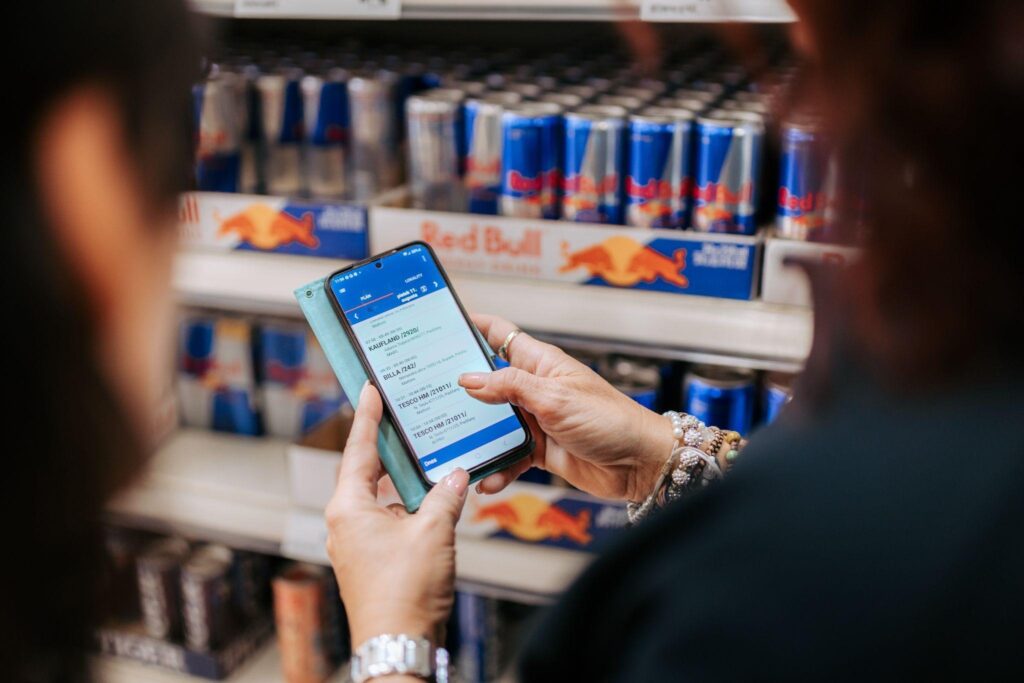
The principle is simple: a trained evaluator visits the establishment (or contacts the company online or by phone) and pretends to be a regular customer. Following a pre-determined script, they evaluate staff behavior, the cleanliness of the premises, the availability of information, compliance with standards, and other criteria. After the visit, they prepare a detailed report with a numerical rating, photographs, and qualitative observations.
Confidentiality is a key element of the entire process; staff must not know that an evaluation is taking place. This is the only way to get a true picture of the day-to-day operations at your facilities.
When did mystery shopping begin?
The first records of systematic evaluations of customer experiences by mystery shoppers date back to the 1940s , when American companies began testing salespeople’s honesty in handling cash. Gradually, the method evolved into a comprehensive marketing research tool that is now used by companies in all sectors, from retail to banking to healthcare.
In Slovakia, mystery shopping has become established primarily in retail chains, banks, hotels, and the automotive industry—in other words, wherever the customer experience directly influences loyalty and repeat purchases.
How does mystery shopping work, step by step?
Professional mystery shopping isn’t just about a single random visit. It’s a structured 5-step process that ensures the results are objective, measurable, and actionable for specific improvements.
1. Script
It all starts with a detailed brief. Together with the client, we create a precise assessment scenario that outlines what the evaluator should do, what questions to ask, and how to respond to various situations. The scenario also defines the evaluation criteria, their weighting, and how they are measured.
A good script isn’t just a list of questions; it’s a simulation of a real customer situation that any of your customers might experience. For example: a customer is looking for a gift for their partner with a budget of €50; they don’t decide right away and want some advice. This is exactly how a typical shopper behaves. The evaluator simply plays the same role systematically, pen in hand.
2. Inspection
A trained evaluator will conduct a visit, phone call, or online interaction exactly according to the script, without appearing any different from a regular customer. They monitor all pre-agreed aspects: from the first contact with an employee, through the purchasing process, to the farewell.
Key detail: The evaluator does not take notes directly in the store. Any notebook or glance at a phone could arouse suspicion. The entire performance remains in their memory until they leave the store.
3. Record
Immediately after the visit, the evaluator records his or her observations on a standardized form while the experiences are still fresh. In addition to numerical ratings, the evaluator also records qualitative observations, including specific examples of behavior and deviations from the standard.
Time plays an important role: psychological studies show that detailed memories of an experience begin to fade after 20–30 minutes. That’s why professional evaluators fill out the form immediately after leaving the establishment—while still in the car or at a café around the corner.
4. Education
If the client requests it, this is followed by training for the evaluated entity—that is, direct feedback for the employees being evaluated. Not as a punishment, but as an opportunity for growth. When an employee knows exactly where to improve, they are much more likely to actually do so.
The most effective approach is not group training, but individual feedback: the employee receives a personalized evaluation, a specific scenario describing what they could have done differently, and a recommendation. This type of feedback is many times more effective than a general “improve your communication.”
5. Reporting
The final step is to deliver a comprehensive report to the client. A professional report includes: a graphical comparison of results, identification of recurring issues, benchmarking across branches, and specific recommendations. Modern systems provide these insights in real time via an online dashboard.
For companies with multiple locations, the dashboard is crucial: management can view the results of all 30 branches in one place, color-coded by performance, and can respond immediately where it’s needed most.
What types of mystery shopping are there?
Mystery shopping isn’t just about physically visiting a store. Depending on which contact channel you’re evaluating, there are four basic types.
In-person mystery shopping
The classic and most common form. The evaluator personally visits the business, store, restaurant, bank, hotel, or pharmacy. They evaluate the entire shopping experience from the moment they enter until they leave: first impression, store appearance, staff attitude, product knowledge, speed of service, and closing the sale.
Telephone Mystery Calling
The evaluator calls a customer service line, information line, or sales department and assesses the quality of the telephone conversation. They monitor the speed of the connection, willingness to help, expertise, and ability to resolve issues. It is used primarily in call centers, insurance companies, telecommunications, and the B2B sector.
Online Mystery Shopping
As e-commerce grows, so does the need to evaluate the digital customer journey. The evaluator goes through the entire purchasing process in the online store, from the website’s clarity, through the order form and chat communication, all the way to package delivery and any potential complaints. They identify the exact points where customers leave without making a purchase.
Hybrid Mystery Shopping
A combination of multiple channels—in-person visits, phone calls, and online interactions. It provides a 360° view of the customer journey, from the first contact through the purchase and after-sales service. This is the most comprehensive approach, ideal for companies with a multichannel presence.
Six Reasons Why TRADE Marketers Won’t Let Mystery Shopping Fall by the Wayside
Company management asks: Why invest in mystery shopping when we have CRM, NPS surveys, and internal audits? The answer is simple—none of these tools will tell you what’s happening in the store when neither you nor your manager is there. Mystery shopping has six specific uses, each measurable and each directly linked to sales results.
1. Review of Customer Standards
Do your employees follow the same procedures at every branch? Are greetings, uniforms, and product offerings consistent across the entire chain? Mystery shopping reveals areas where deviations occur, even when internal reports show everything is in order. For example, a chain with 12 branches may have the same service methodology on paper, but a mystery shopper will reveal that in three of them, employees simply aren’t engaging in active selling.
2. Measuring Customer Experience
How does a customer feel in your store? Is the environment pleasant, clean, and easy to navigate? Does the customer receive the information they need? No system can measure these emotional factors—only a live evaluator who actually experiences the store firsthand.
3. Identification of Training Needs
Mystery shopping clearly shows which aspects of their work staff are doing correctly and where they need training. It provides an objective basis for HR and training departments—not a manager’s impressions, but numbers and specific observations. If the evaluator notes that in 7 out of 10 visits, the employee did not offer an additional product, you know exactly what to focus on in training.
4. Benchmarking Across Branches
Comparing the results of multiple stores or branches will show which locations are excelling and which are lagging behind—and why. The top-performing branches can then serve as a model for the others. This also acts as a healthy source of internal motivation: when branches know they are being compared, standards naturally rise.
5. Testing New Products or Processes
Before rolling out a new offering or process on a large scale, you can use mystery shoppers to test how staff are implementing the new procedures and how customers are responding to them. It’s a more cost-effective alternative to high-profile pilot projects.
6. Compliance in Regulated Industries
In the banking, insurance, and healthcare sectors, compliance with legal obligations is essential. Mystery shopping verifies whether employees provide information in accordance with guidelines, thereby helping to prevent fines and reputational risks.
Mystery Shopping Results by the Numbers
Investing in mystery shopping isn’t just about the “customer experience.” It has a direct impact on business results.
Customer Satisfaction and Loyalty:
- Companies that systematically use mystery shopping achieve an average increase of 47% in customer satisfaction (NAUT Group).
- A satisfied customer comes back. And the opposite is doubly true: every dissatisfied customer shares their negative experience with at least five other people (feedback.sk).
Growth:
- Companies that conduct regular mystery shopping grow , on average , 3.2 times faster than their competitors who do not use this tool (NAUT Group).
- Average sales growth driven by an improved customer experience: +28% (NAUT Group).
Costs:
- The cost of acquiring a new customer is up to 10 times higher than the cost of retaining an existing customer (feedback.sk). Mystery shopping helps increase the loyalty of the customers you already have.
These results cannot be achieved through a one-time survey. Mystery shopping operates as a continuous cycle of measurement, improvement, and re-measurement, and that is precisely its greatest strength.
Internal Audit vs. External Mystery Shopping – Which Is More Effective?
Many companies ask: Isn’t it enough for us to check this ourselves? Why pay an outside agency?
The answer is simple: internal audits and external mystery shopping measure different things.
An internal audit determines whether procedural requirements are met—the correct forms, the correct procedures, and the correct documents. It is important for compliance.
External mystery shopping reveals what the actual customer experience is like—what happens when management isn’t present, and how an employee really behaves toward an unknown customer. An internal auditor cannot simulate this because the staff knows who they are.
In addition, an external evaluator provides an unbiased perspective. He or she is not influenced by what we know, how we do things, or why we do them that way. He or she sees only what the customer sees.
Combining both approaches provides the most comprehensive picture: internal audits verify processes, while mystery shopping verifies the customer experience.
Where in CZECH REPUBLIC AND Slovakia is mystery shopping used most extensively?
Not every industry uses mystery shopping to the same extent. There are sectors where this method is practically the norm and where not using mystery shoppers would be a mistake. Here is an overview of the most active ones:
- Retail chains – checking compliance with planograms, service quality, and store cleanliness
- Banks and Insurance Companies – Compliance, Quality of Advisory Services, Product Knowledge
- Hotels and Restaurants – Customer Experience, Service Standards
- Automotive Industry – Showrooms, Sales, Warranty Service
- Pharmacies and Drugstores – Customer Service, Adherence to Standards
It is also gradually expanding into e-commerce, where mystery shopping evaluates the entire online shopping experience, the speed of customer support, and delivery.
Mystery shopping is an investment, not an expense
When a customer receives exceptional service, they don’t just make a purchase they come back. They’ll recommend you to their friends. They’ll become an ambassador for your brand. And that’s a value no advertisement can create.
Mystery shopping provides you with precise data on where you’re doing well and where you have room for improvement. No assumptions, no vague impressions—just concrete numbers and facts you can rely on.
If you want to find out how your business measures up in the eyes of a mystery shopper and exactly what to improve to boost sales and increase customer satisfaction— check out our mystery shopping and audit services, or contact us for a no-obligation inquiry.