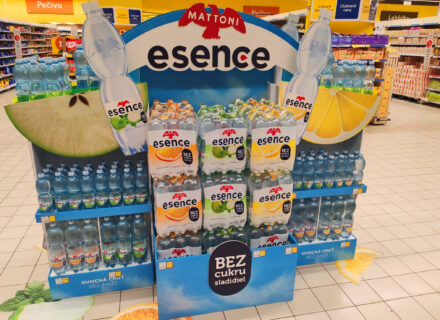

The Fourth Industrial Revolution has brought new ways of digitalization and is changing the possibilities of automation and the paradigm of business models. As a result, the market is changing unstoppably and suppliers often do not have the appropriate ways to respond to the changes. One of them is the possibility of outsourcing, which provides successful entrepreneurs and international companies with a solid construction and subsequent effective management of not only sales operations. Riding the wave of this era, the Czech outsourcing company NAUT GROUP has become a leader in the field. Its portfolio includes the retail or FMCG sector, which fills the shelves of every store.

“We divide the Czech market into on trade, i.e. the so-called horeca, which includes hotels, restaurants, bars and cafés, and off trade. The latter is further divided into modern and traditional, with the traditional market consisting of independent shops mostly owned by Czech owners. The modern market is made up of foreign chains. The functioning of the fever, modern and traditional markets differs significantly, and so does our approach to serving them,”
explains Petr Nejedlý, CEO of NAUT GROUP and adds
“The times are constantly changing and so are the trends of individual markets and the way they are served, so our services must be dynamic.”
In recent years, for example, the competencies of sales representatives in the modern market have been significantly reduced. Agreements between suppliers and chains are becoming centralised and the role of sales representatives is more visible in traditional outlets. However, even here, the main agendas are more likely to include checking compliance with display standards, price monitoring or checking compliance with execution of agreed actions. As the role of sales reps evolves, their sales visits are becoming financially inefficient, firstly due to rising labour costs, the increasing difficulty of getting the right data and then due to the fact that sales reps do not do much business today. Companies are therefore looking for new ways to obtain the data they need.
Suppliers themselves know how essential it is to have good data from stores for marketing purposes, optimising product offerings, monitoring customer behaviour, market research and, last but not least, for further negotiations with chain headquarters.
“We offer a variety of solutions to our clients. Every business and every business network is different and unique. Our in-store managers get relevant data with the benefit that this service is significantly cheaper than collecting data through dedicated sales reps, thanks to the synergy of multiple in-store projects,”Michaela Zdeňková, Retail services director from NAUT GROUP, revealed one of the many advantages of outsourcing.
Although data collection can be, and undoubtedly still is somewhere, carried out through various technologies such as camera systems and motion sensors. However, the use of these technologies raises questions about data protection and customer privacy. One of the main issues in an era of such high and easily achievable digitalisation is precisely the question of privacy worldwide.
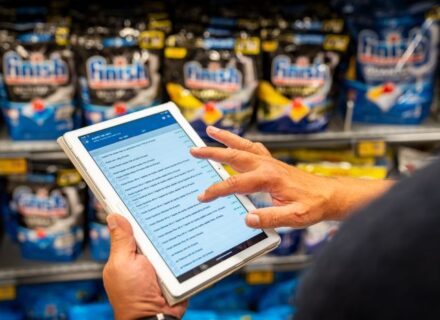
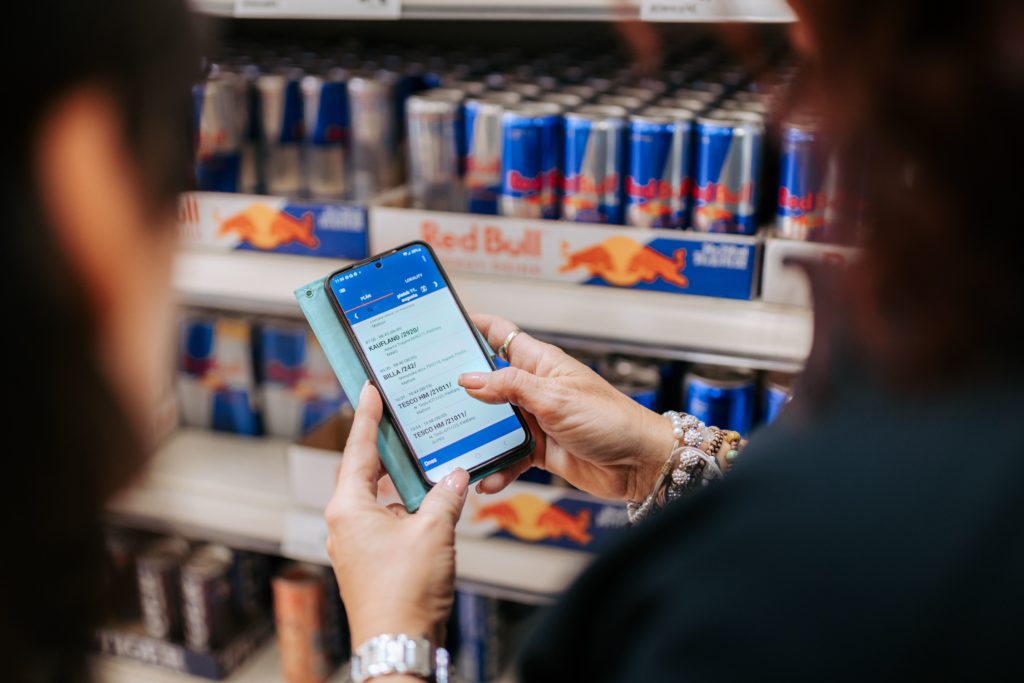
That is why the Czech company NAUT GROUP offers a much more modern solution in the form of the Smart Check tool. The client selects the sample size of stores from individual chains on the web interface, inserts the so-called listing and information about planned promotions according to the data required from the stores.
“In this way, we can provide clients with information about the availability of their products in stores, compliance with the action display, including photo documentation. With price monitoring, they can track compliance with recommended retail prices, which they can then compare across all monitored stores. For companies, such comparisons are also important in order to maintain ethical and fair treatment of the end customer,”Michaela Zdeňková described one of the methods.
The situation is different in the traditional market. The reason is simple – there are no central agreements. The sales representative still has the ability to influence orders or the display of goods, which is why some suppliers concentrate their sales teams here. However, they have to reckon with higher costs for sales representatives’ travel, as the stores are mainly located in smaller towns. At the same time, the “profitability/performance” of these outlets is a key issue.
“Successful business companies are logically making more and more decisions based on exact data. The demands for the right data from stores are growing, and we offer our clients solutions that go beyond the established ways. We constantly monitor the changing trends among these markets and I dare say our diligence is reflected in the level of service we provide. Just as the environment around us is changing, so too must we develop ways and options to make our clients’ jobs easier,”