

4PL logistics (fourth-party logistics) means that you entrust the management of the entire supply chain to a single partner. This partner often does not handle transportation or warehousing itself: it selects, contracts with, and coordinates other service providers. Carriers, warehousing companies, courier networks, and customs brokers. You have a single point of contact and one person responsible for the outcome.
What Is 4PL Logistics? Definition
4PL is a model in which a single company takes over both the strategic and operational management of the entire supply chain, from selecting providers to day-to-day coordination. It is not just another carrier or another warehouse. It is a management layer above them.
Lila Logistik captures this role precisely: the focus is not on execution itself, but on comprehensive management. Amazon Supply Chain Services describes 4PL as a single point of contact that manages the entire supply chain while also coordinating multiple 3PL providers.
From a practical standpoint, this means three things:
- Responsibility for the outcome lies with a single company, not with five suppliers who point fingers at each other.
- Decisions are made at the overall level, not in isolated links of the chain.
- Your data is consolidated in one place instead of being scattered across four systems.
According to consultants at Penske Logistics, the difference between a 3PL and a 4PL lies precisely in this: a 3PL manages logistics outsourcing for a specific customer, while a 4PL manages its 3PL partners. That is why a 4PL is also referred to as a lead logistics provider (LLP).
However, there is also another aspect of the definition that tends to be overlooked in marketing. According to DCL Logistics, a true 4PL is neutral: it compares its own services with those of the competition and always acts in the client’s best interest. If a company that calls itself a 4PL owns its own warehouses and fleet and gives itself priority in its network, it is not a 4PL. It is a 3PL with the ambition to manage others.
How 1PL, 2PL, 3PL, and 4PL Differ
The 1PL through 4PL models indicate how much control you delegate outside the company. The last of these represents the highest level of outsourcing for logistics operations.
| Model | Who Performs the Work | Scope | Ownership of assets | Typical Application |
| 1PL | The company itself | Everything from planning to delivery | own warehouses, fleet, and staff | small businesses, startups, local distribution |
| 2PL | external carrier | transportation, or storage | carrier’s assets | companies that only need pickup |
| 3PL | external service provider | storage, order picking, packaging, shipping, customs clearance | typically the provider’s assets | companies with dedicated logistics |
| 4PL | The coordinator manages the others | the entire supply chain, including 3PL partners | Asset-light; assets belong to suppliers | Comprehensive, multi-hub, and cross-border networks |
1PL: The company owns its own warehouses and fleet and manages everything in-house. This is suitable for small businesses with a limited number of regular customers. The downside is the high upfront investment, since you pay for capacity even when it’s empty.
2PL adds external transportation. The carrier owns trucks, ships, or planes and focuses on one thing: moving goods from point A to point B. According to CEVA Logistics, warehousing is sometimes added to the transportation process, but the logic remains transactional.
3PL is the most widely used model today. The provider handles warehousing, order fulfillment, packaging, shipping, customs clearance, and sometimes even returns. The provider is responsible for the results to the extent specified in the contract and is typically one of several suppliers in the portfolio.
4PL takes it one step further. It does not own assets or perform operations: it selects, contracts with, and manages the providers who carry out those operations. It may sound like a minor difference, but in practice, it determines whether you have an overview of the entire supply chain or just two of its links.
What 4PL Encompasses in Practice
Everything related to the movement, storage, or flow of goods and information falls under the purview of 4PL. This breaks down into three areas.
Supply Chain Management
This is the core of the model. 4PL selects, contracts, and manages logistics providers: carriers, warehousing companies, and courier networks. This includes transportation management (selecting routes and modes of transport, procuring capacity), coordinating warehousing and distribution, managing inventory across the network, and planning for business continuity in the event of an outage.
An important detail: most 4PL providers are asset-light or asset-neutral, so they select the best 3PLs and carriers for each function rather than pushing the company to acquire its own assets.
DP World adds a proposal for the flow of goods: how goods should move through the supply chain, where inventory should be located, and where markets should be connected. For manufacturers supplying multiple countries, this is one of the most critical decisions of all.
Integration of Carriers and Warehouses
The second area is organizational: bringing different providers together into a single functional unit. A 4PL sets up order fulfillment, the handoff of shipments between the warehouse and the carrier, customs coordination for cross-border transport, and rules for who communicates with whom in the event of an outage.
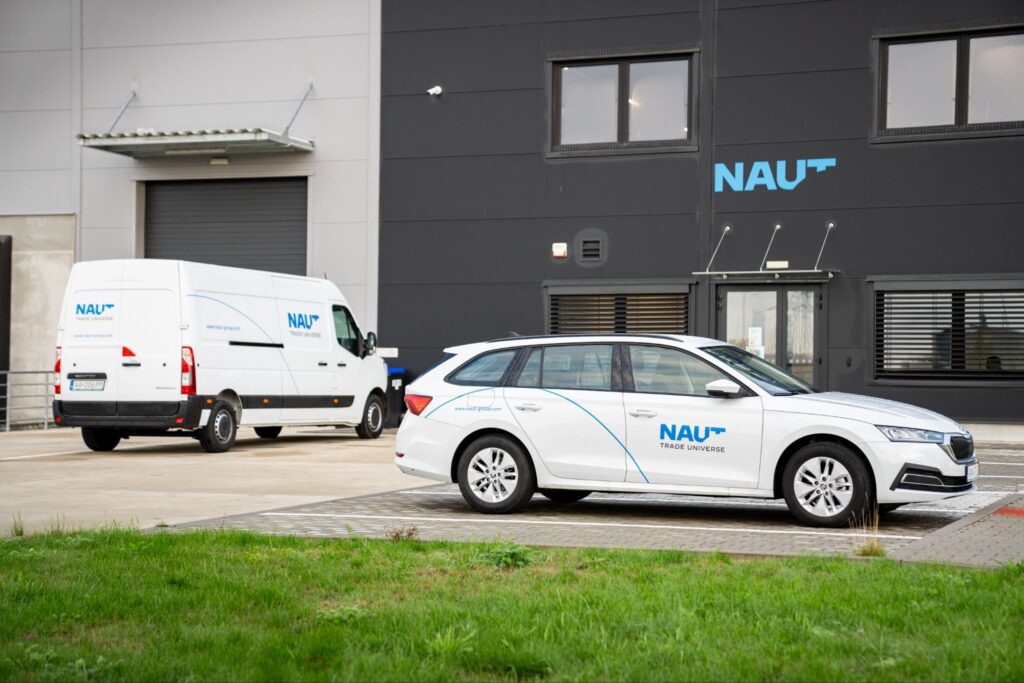
The second aspect is geography. When there are multiple warehouses in different countries, a decision must be made as to which hub will fulfill each order, and this cannot be done manually. For a company that sells in Slovakia, the Czech Republic, and Hungary, the difference is between delivery within two days and delivery within a week.
Data, Reporting, and Visibility
Without visibility, a 4PL is just a more expensive intermediary. That’s whythe Control Tower serves as the central hub where data on transportation and processes is collected.
According to DB Schenker, this is a single point of contact with a specialized team that operates around the clock, featuring a transportation management system (TMS) and a dashboard of key performance indicators. Kuehne+Nagel uses a digital Control Tower that provides real-time overviews, automation, and predictive analytics. Providers adhere to standards such as ISO, TAPA, SQAS, and GDP, which are the primary selection criteria for pharmaceuticals, refrigerated goods, or electronics.
Which metrics should you request in the contract? These are industry benchmarks by sector (ranges from ASCM SCORmark, ISM, and MetricHQ/APCQ):
| KPI | Retail and E-commerce | Manufacturing | Distribution |
| OTIF (on-time-in-full) | 95–98% | 94–97% | 96–99% |
| Perfect Order Rate | 90–96% | 92–97% | 94–98% |
| Inventory Turnover (Annual) | 8–12 | 5–8 | 6–10 |
| Cash-to-Cash Cycle | 40 days | 65 days | 50 days |
| Claim Ratio (complaints) | < 1% | < 1% | < 0.5% |
| Carrier Score | > 95% | > 93% | > 95% |
If a partner cannot provide these figures at least on a monthly basis, they do not have reporting. They have an export from the transportation system.
When 4PL Pays Off and When It Doesn’t
Most articles stop at the benefits here. We’ll give you a realistic perspective.
4PL becomes cost-effective when annual logistics costs exceed approximately $2 to $3 million and operations span multiple regions. With a management fee of 5–12% of logistics costs, a one-time implementation fee of $50,000–$500,000, and an annual platform fee of $10,000–$50,000, the upfront investment is reasonable. Studies indicate savings of 10–25% of total supply chain costs within 18–24 months.
Illustrative calculation: A company with annual logistics costs of $5 million pays a 6% management fee, or approximately $300,000. By optimizing its network, it saves about $750,000. The net savings are about $450,000 per year.
A survey of 4PL service users conducted by ARC Advisory Group, DC Velocity, and Eye For Transport reveals more realistic figures than those presented by suppliers: 68% of respondents save 3–5% or more on transportation costs, and 32% save 12% or more. A 5% or greater improvement in service levels was reported by 45.9% of respondents, with the majority seeing improvements in the 5–10% range. These aren’t numbers that will transform a company beyond recognition. They are numbers that will pay for growth.
When 4PL isn’t worth it:
- You have one warehouse and low volume. With just a few hundred orders per month from a single location, the management fee will outweigh the benefits.
- You’re handling a short-term project. A 3PL can handle seasonal spikes quickly, without the need for implementation.
- You want to maintain direct control over packaging and branding. If the unboxing experience is part of your brand, a hands-on approach is more important than optimization.
- You don’t have anyone to manage the partner. 4PL doesn’t mean you’ll stop dealing with logistics. It means you’ll stop doing it yourself.
- Your network is simple and stable. The fewer providers, regions, and moving parts, the weaker the case for 4PL.
Among the risks, the following deserve attention: loss of direct control, data security when sharing across multiple systems, and higher initial costs with an uncertain return on investment. One caveat applies: without an analysis of existing processes, the network’s weaknesses will simply become digitally visible.
4PL or 3PL? How to Decide
Try this approach. You need the answers before you approach any partner.
- Calculate your annual logistics costs and the number of providers. With just one carrier and one warehouse, a 3PL is almost always the better option.
- Measure how many internal hours per month you spend managing suppliers— tracking shipments, reconciling invoices, and handling complaints. If it’s more than one person’s workload, you’re paying a hidden cost.
- Verify that you have reliable data. Do you know what your OTIF is across all carriers? If not, a 4PL has nothing to work from, and you have no basis for evaluating the results.
- Test where the threshold lies. Below $2–3 million in annual logistics costs, a 4PL is a rare exception.
- Consider a hybrid model. There are providers that combine 3PL and 4PL—that is, both day-to-day operations and high-level management—under one roof. For a company in transition, this is a more realistic path than jumping straight into a full 4PL model.
- Define what you want to see at the end of the first year. If the answer is “one contract and one set of KPIs,” you’re in a 4PL model. If the answer is “faster order fulfillment in the warehouse,” you need a better 3PL.
How to Choose a 4PL Partner
When making your selection, consider these seven factors. The first two determine whether the partner is even a viable option.
- Neutrality. Is it asset-neutral? Does it have a sufficient number of verified 3PLs and carriers in its network to choose from? If it owns its own warehouses and gives priority to its own operations within the network, it is not a 4PL. This criterion cannot be bypassed.
- Technology and Control Tower. Does it offer real-time visibility, a functional TMS, and analytics? According to DCL Logistics, this is the backbone of a modern 4PL. Without it, you’re paying for coordination that you could handle in a spreadsheet.
- Industry Experience. Do they understand the specifics and regulationsof your sector? Refrigerated goods, electronics, chemical products, and FMCG all have different requirements for both warehousing and insurance.
- Data security. How does it protect your data when your competitors are also operating on its network?
- Network partners. Ask not only about the 4PL, but also about who they’ll bring into the network and what their history is with that partner.
- System compatibility. How will they integrate with your IT platforms? This is where implementation complexity arises, often exceeding both the schedule and the budget.
- Transparent metrics. Clear KPIs and demonstrable early results. The contract should include fixed monthly fees, variable transaction fees, and metrics that cover not only the services but also their management.
Based on my own experience managing supplier networks, here’s one observation: a good 4PL partner will also tell you where you shouldn’t outsource, even if that means a smaller scope of work for them. A company that says “yes” to everything isn’t a 4PL. It’s a sales company with good marketing.

Frequently Asked Questions About 4PL Logistics
What is the biggest difference between 4PL and 3PL?
A 3PL provider performs the work, while a 4PL provider manages it. A 3PL provider owns or operates warehouses and transportation and is responsible for a defined scope of activities. A 4PL provider typically does not own any assets; instead, it selects and contracts with 3PL partners, coordinates them, and bears responsibility for the outcome of the entire supply chain. This difference is most evident in the event of a disruption: in the 3PL model, you call your suppliers; in the 4PL model, you call a single partner.
Does a 4PL make sense for a medium-sized company in Slovakia?
For most medium-sized companies with a single warehouse, a 3PL is the right choice. A 4PL starts to pay off when a company works with multiple carriers and warehouses, sells in multiple countries, or loses track of who is responsible for which step. For a manufacturing or retail company distributing to three markets, this is a realistic consideration even at lower sales volumes than the generally accepted threshold.
How long does the transition to 4PL take?
The first phase is analysis: mapping workflows, costs, and providers. This is followed by the selection and contractual engagement of network partners and the integration of systems. According to studies, results are achieved within 18–24 months, though the first changes in costs and visibility can be seen sooner. One thing can be accelerated: the better the data you have before starting, the shorter the analysis phase will be.
Conclusion: 4PL as Management Rather Than Execution
Let’s sum it up in one sentence: 3PL executes logistics; 4PL manages it. If you’ve been choosing between carriers and warehouses up until now, 4PL takes decision-making to the next level: how the entire supply chain should function, where inventory should be stored, and who is responsible for the outcome.
4PL logistics pays off when the complexity of the supply chain exceeds your capacity to manage it. It isn’t worth it if you have a single warehouse, low volume, and want to keep tight control over packaging. There’s also a hybrid solution between these two scenarios, so ask about the scope of management, not the size of the partner’s logo.
If you’re trying to figure out how to consolidate multiple carriers, warehouses, and markets into a single overview, check out our logistics services. You can find the basics in the article “What Is Logistics? Meaning, Types, and Why It’s Essential for E-commerce.” We’ll then go over your situation together.
Sources: engineering.sk, DHL, DCL Logistics, lila-logistik.com, DB Schenker, Amazon Supply Chain Services, CEVA Logistics, olimpwarehousing.com, sheerlogistics.com, wwex.com, DP World, cdslogistics.net, NAUT GROUP.